Pied Parker
Integrated parking infrastructure unifying hardware, payments, and operational intelligence.
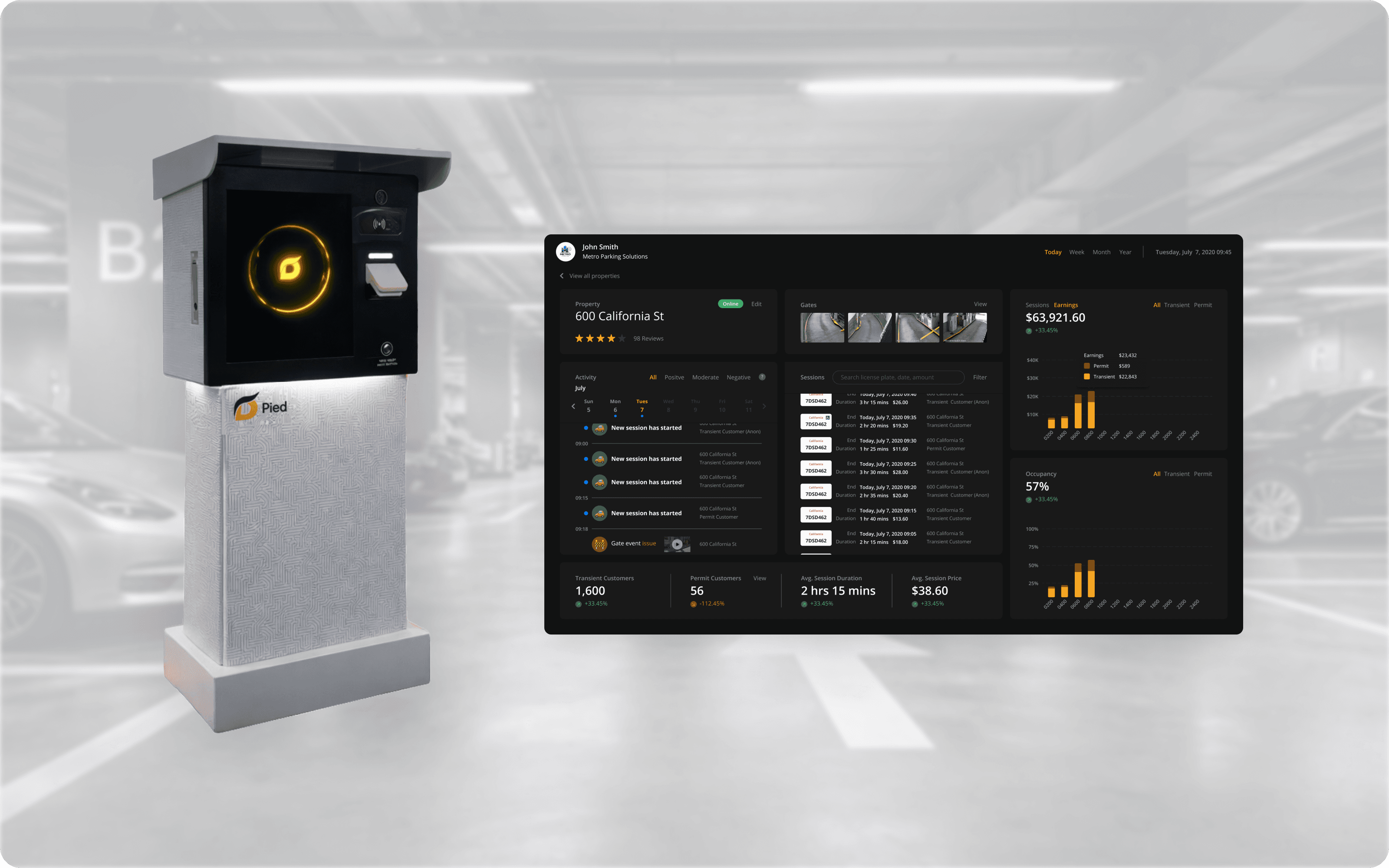
Project Context
TIMELINE
2015–present (~10 years). Core hardware and SaaS architecture designed and deployed 2015–2020; ongoing product and design leadership through present.
STATUS
Live — 16+ deployed properties, $17M+ in transactions processed, 20 granted U.S. patents
WHAT EXCITED ME
Designing a system that had to work in a parking garage at 11pm, with no help center and no retry — and making that constraint the reason the design got better
WHAT I LEARNED
Physical constraints are the best editor. When a design has to survive the real world under pressure, you find out fast what actually matters
Overview
Pied Parker is a parking infrastructure platform I co-founded — unifying kiosk hardware, payment flows, and operator intelligence into one deployable system across 16+ properties and $17M+ in transactions processed.
Pied Parker is a B2B parking infrastructure platform unifying hardware, payments, and operational intelligence into a scalable enterprise system. As co-founder and Head of Design, I architected the foundational hardware–software system — defining kiosk interaction models, payment workflows, SaaS dashboard architecture, and the product and brand identity framework from inception. The system architecture is protected by 18 granted utility patents.
Problem
Parking operations were running on disconnected hardware, manual reconciliation, and tools with no real-time visibility — a structural infrastructure problem, not a UI problem.
Parking operations are historically fragmented: disconnected hardware systems, manual reconciliation, and limited operational visibility across properties. Operators needed reliable integrated payment infrastructure, real-time insight, and multi-property management — in a system that could scale to new deployments without rebuilding from scratch.
The opportunity was a cohesive infrastructure layer that unified hardware, payments, and intelligence into one operational platform.
Approach
Four layers — hardware experience, payment architecture, operational intelligence, and multi-property management — designed as a unified system from day one rather than separate workstreams.
I structured Pied Parker as an integrated infrastructure system composed of four primary layers:
Hardware Experience
Designed intuitive kiosk interactions within real-world environmental and physical constraints.
Payment Architecture
Defined streamlined, secure transaction flows supporting frictionless user interaction and reliable reconciliation.
Operational Intelligence
Built dashboard systems surfacing live metrics, financial reporting, and performance transparency.
Multi-Property Management
Established scalable workflows enabling operators to manage distributed assets through a unified interface.
Core principles:
Design infrastructure, not isolated features
Integrate physical and digital systems holistically
Prioritize operational clarity
Establish scalable product and identity systems from inception
The unified approach ensured both the user experience and market positioning reflected operational reliability and long-term scalability.
Key Design Decisions
Three decisions defined the platform: treating hardware UX as a constraint-satisfaction problem, insisting on physical-digital unification from the start, and investing in operator-facing tools as heavily as end-user experience.
Designing hardware UX under real-world physical constraints. Kiosk interaction design looks simple until you account for the actual environment: direct sunlight washing out screens, users in motion with limited dwell time, gloved hands, accessibility requirements, and hardware enclosure constraints that limit what's physically possible. The key decision was to treat every interaction as a constraint-satisfaction problem — not "what's the ideal flow" but "what's the most reliable flow given everything that can go wrong in a parking lot at 10pm." This led to deliberately simplified interaction models that prioritized error recovery and transaction completion over elegance.
Unifying physical and digital systems as a single design problem. The temptation in hardware-software projects is to treat them as parallel workstreams — a hardware team and a software team — and reconcile at the end. I pushed for a unified architecture from the start, which meant the kiosk interaction model, the payment flow, and the operator dashboard were all designed as parts of the same system. The practical impact was that operators experienced consistent data, consistent language, and consistent mental models whether they were looking at a physical device or a web dashboard — which directly supported adoption and reduced support overhead.
Building for operators, not just end users. The natural design instinct in consumer-facing products is to optimize for the end user — the parker. But Pied Parker's core customer is the property operator. Early on I made a deliberate decision to invest as heavily in the operator-facing dashboard as in the consumer-facing kiosk, specifically in real-time visibility and reconciliation workflows. This turned out to be a competitive differentiator: operators chose and stayed with the platform not just because the kiosks worked, but because they could actually see and manage what was happening across their properties.
Impact & Outcomes
$17M+ in transactions processed across 16+ deployed properties, built on the integrated architecture I designed from zero.
$17M+
Transactions Processed
16+
Properties Deployed
The integrated system architecture I built from zero — spanning hardware interaction design, payment flows, and operational dashboards — supported $17M+ in transactions processed across 16+ deployed properties.
Defined end-to-end hardware and SaaS system architecture from inception
Designed kiosk UX supporting reliable transaction flows across physical environments
Built real-time operational dashboards enabling multi-property management at scale
Established scalable design systems supporting continued deployment growth
Named inventor on 20 granted U.S. patents (18 utility, 2 design) and 5 pending applications covering computer vision, vehicle detection, image-based recognition and navigation, and transaction interfaces, filed 2016 through 2025.
What I'd do differently
I'd have invested in the consumer-facing mobile experience — the parking discovery and account setup flow — with the same rigor I applied to the operator SaaS from the start. The kiosk hardware and operator dashboard correctly absorbed most of the design effort early on, but the consumer mobile flow ended up more utilitarian than it needed to be. User research showed parkers completing transactions successfully while feeling uncertain throughout the flow. That uncertainty was a solvable design problem we deprioritized because transactions were technically completing — which isn't the same thing as users feeling confident.
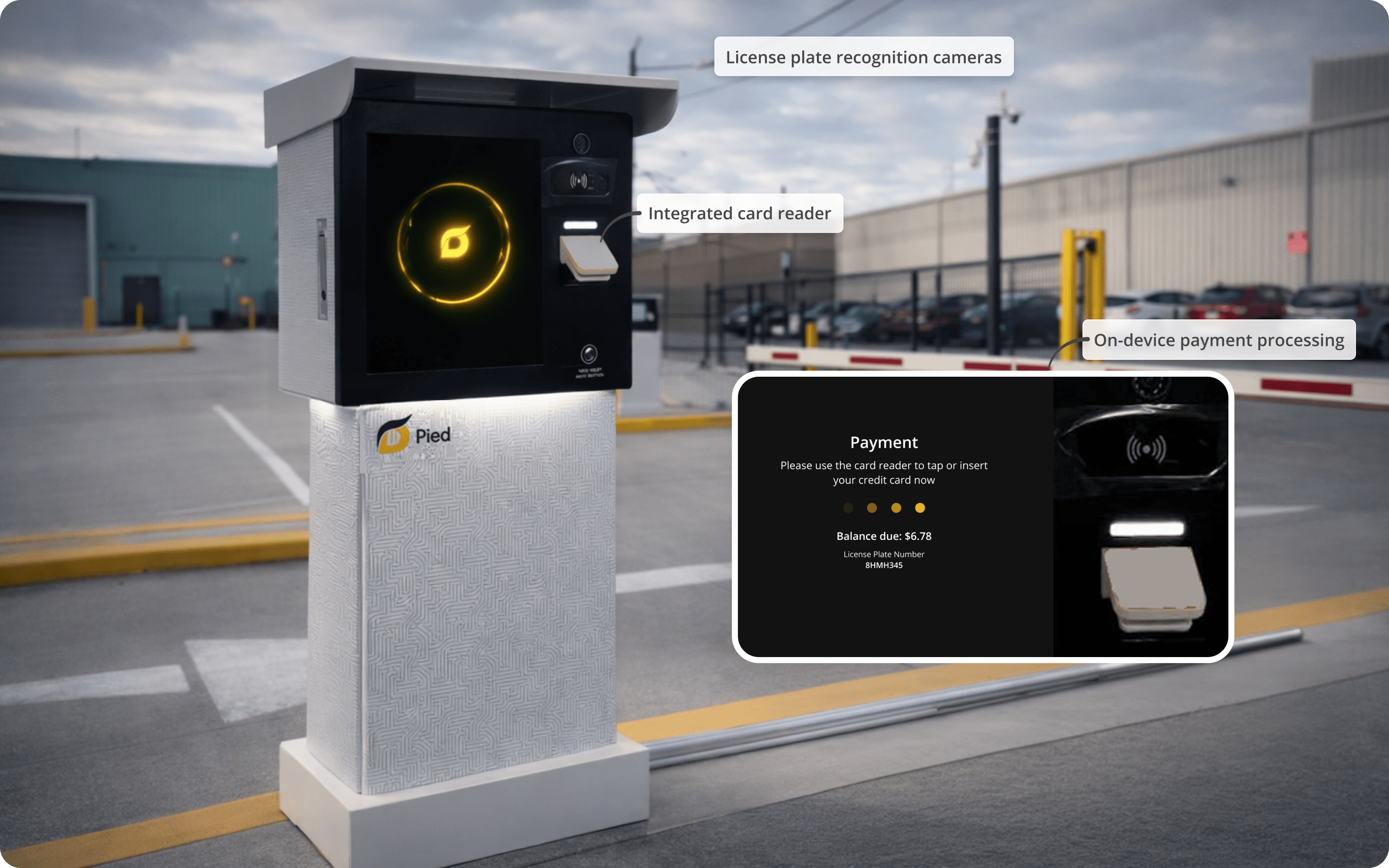
Parking kiosk system designed in collaboration with manufacturing partners—balancing physical constraints, environmental durability, and accessible interaction design.
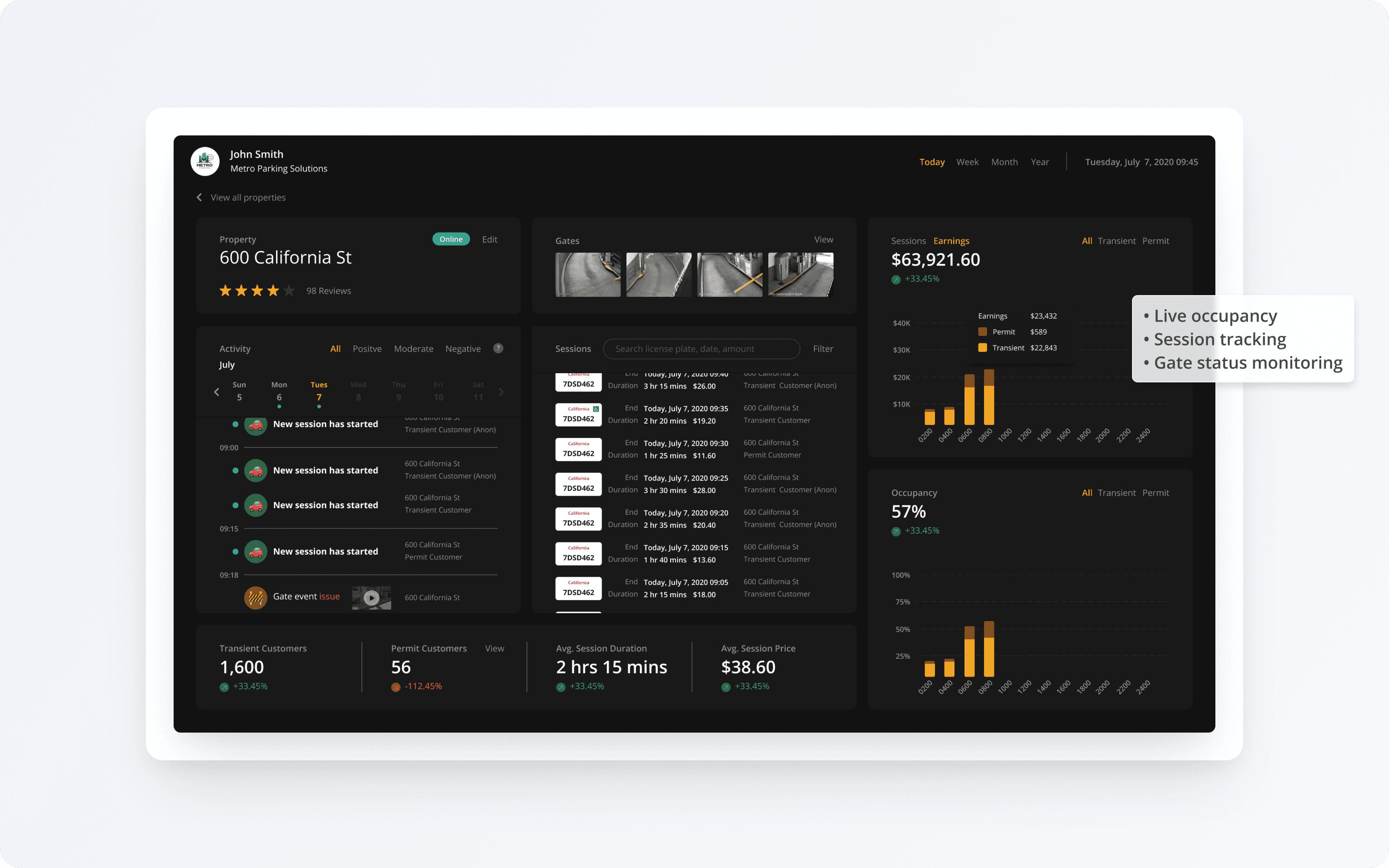
Web-based management dashboard providing real-time monitoring of transactions, equipment status, and property-level performance.
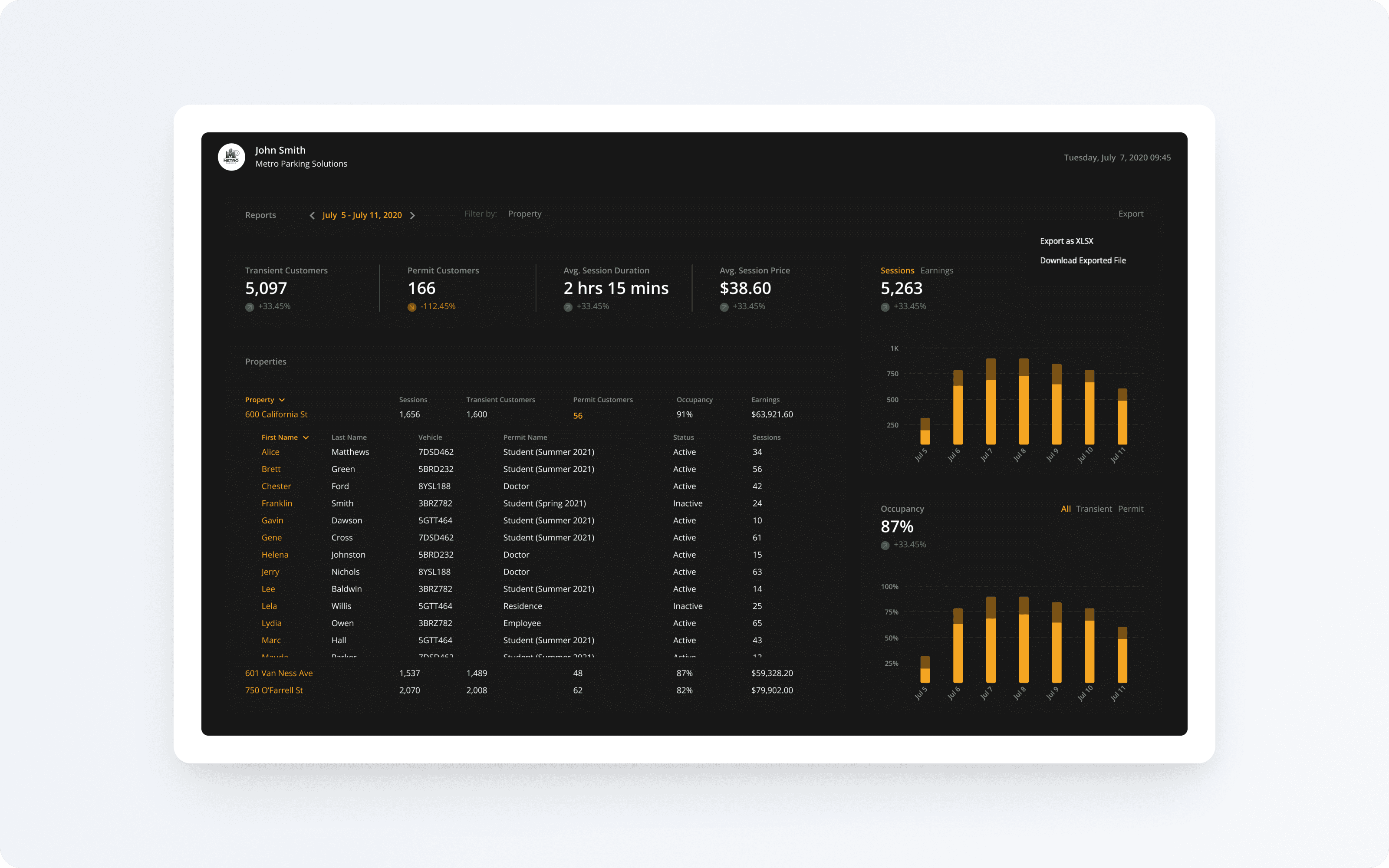
Revenue intelligence and reconciliation workflows designed to ensure financial transparency and operational accountability.
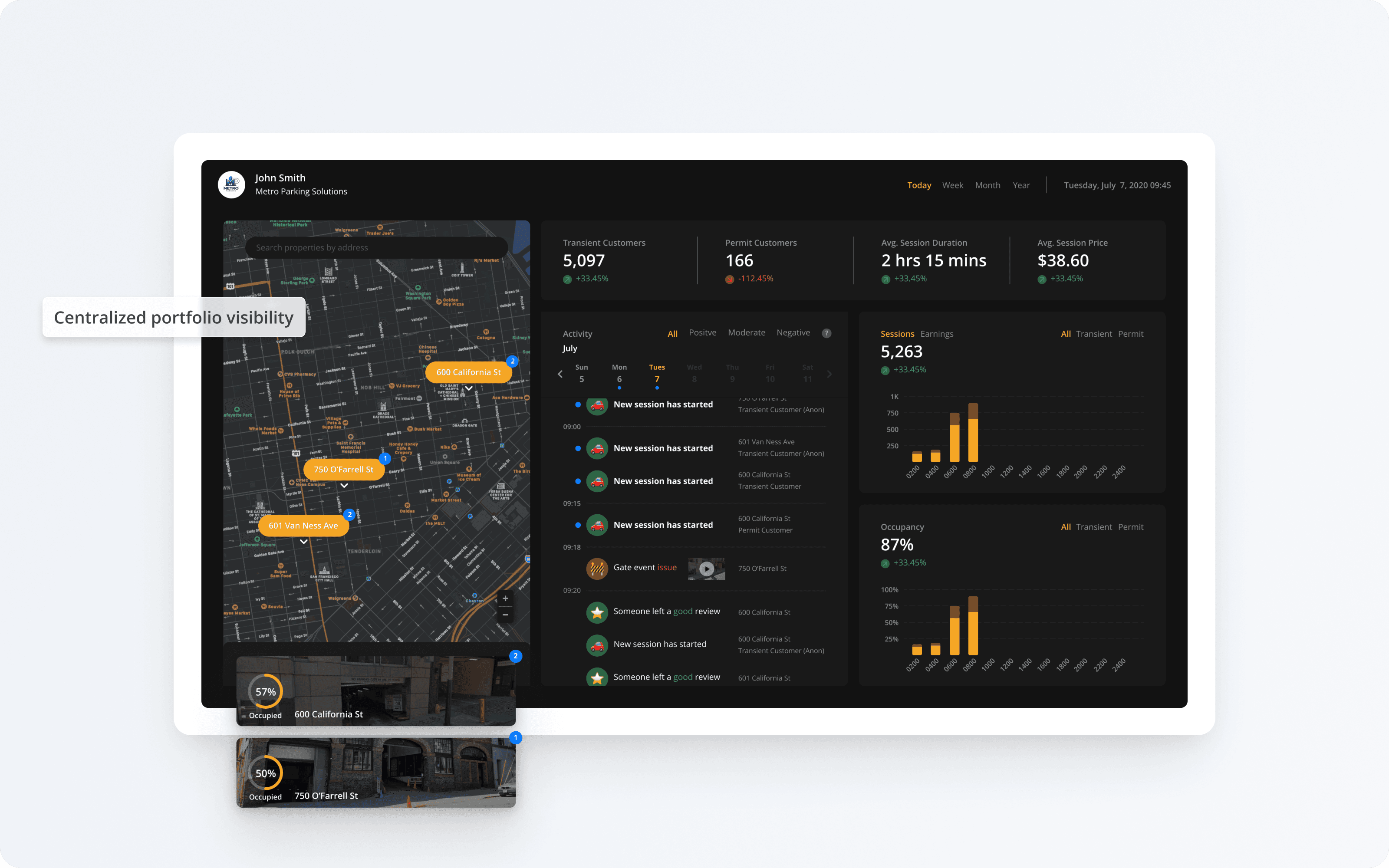
Modular system architecture supporting portfolio-level oversight and scalable expansion across distributed properties.
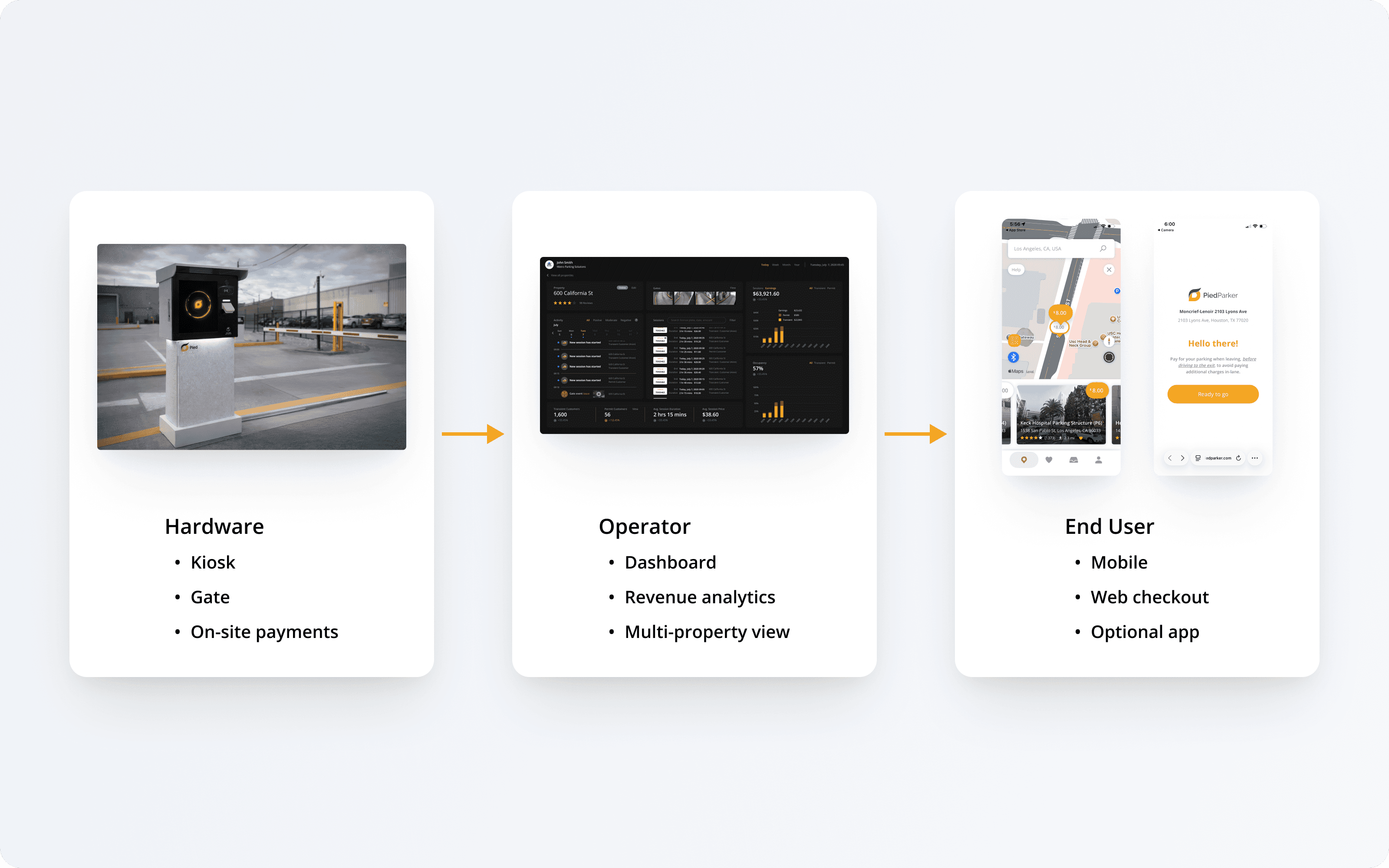
Pied Parker operates as a vertically integrated platform connecting physical hardware, enterprise management tools, and optional consumer interfaces into a unified revenue system.

Let’s build intelligent systems together.
Open to Head of Product Design and Director of Product Design roles across AI, fintech, infrastructure, and complex platforms.