Jolt
Multi-sided B2B solar supply-chain marketplace centralizing discovery, communication, and transaction workflows.
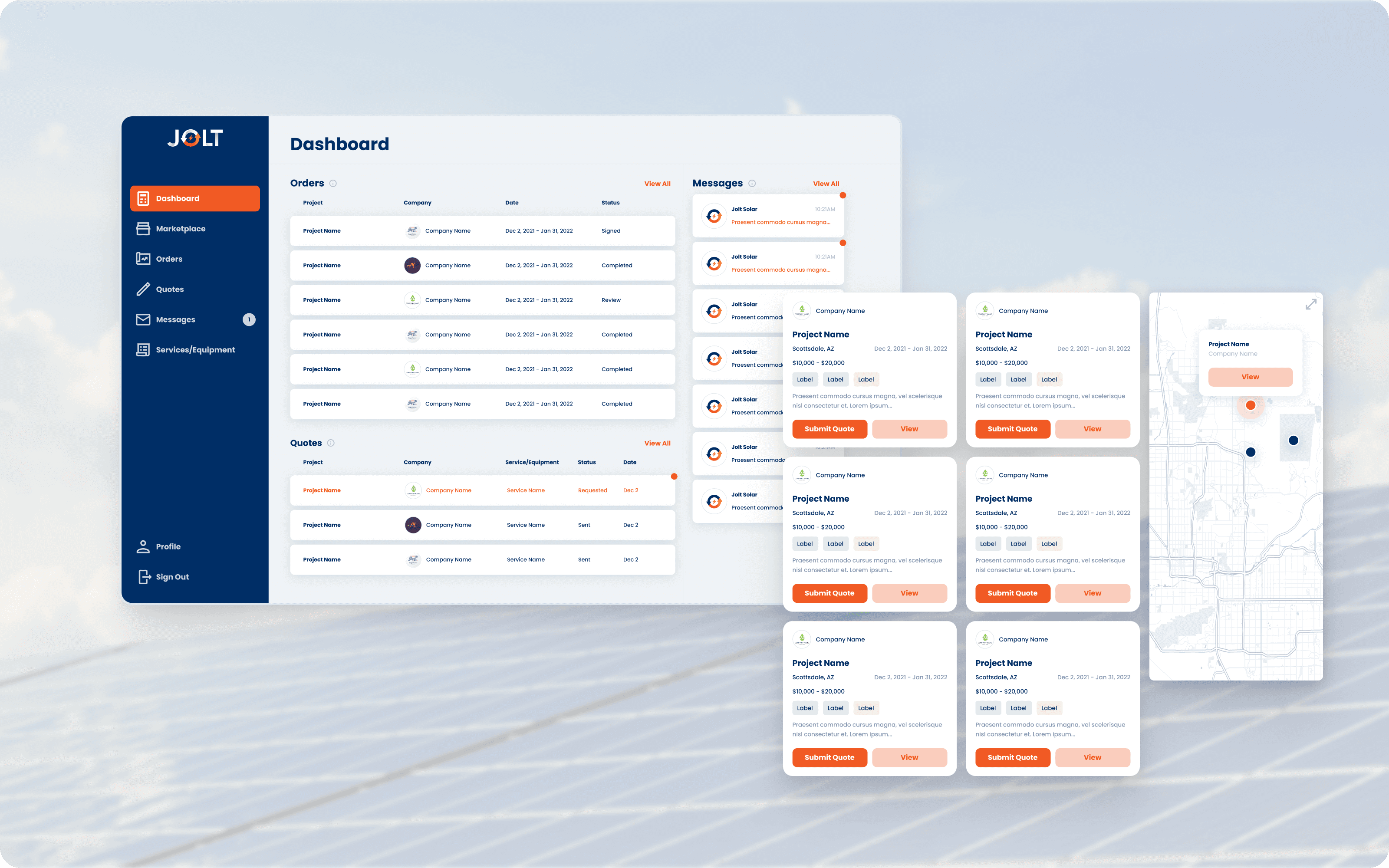
Project Context
TIMELINE
~6-month design sprint for MVP and investor validation
STATUS
MVP complete — reached investor validation stage; not taken to full market launch
WHAT EXCITED ME
The constraint of designing for three distinct user roles — installers, suppliers, project managers — who all had to find immediate value in the same underlying system
WHAT I LEARNED
Multi-sided architecture requires discipline about what to solve first. Designing for everyone at once is designing for no one.
Overview
Jolt was designed to consolidate fragmented solar supply chain coordination — bringing installers, suppliers, and project managers into one platform for discovery, communication, and transactions.
Jolt is a multi-sided solar marketplace I designed to streamline coordination across the fragmented solar installation ecosystem. As product designer, I translated early-stage marketplace concepts into a structured architecture — defining listing models, messaging systems, transaction workflows, and role-specific dashboards that supported pilot validation and investor alignment.
Problem
Solar project coordination was happening across disconnected tools — email, phone, spreadsheets — with no shared visibility on orders, availability, or timelines.
Solar installers source materials through disconnected supplier networks. Communication happens across email, phone, and spreadsheets. Transactions lack centralized tracking. The result is delays, misalignment, and project-level inefficiency across every stakeholder.
The challenge was architecting a scalable coordination layer that could support multiple user roles, structured communication, and transactional workflows within a single system — not just a directory or a chat tool.
Approach
Three layers — marketplace discovery, integrated communication, and transaction workflows — designed to reduce fragmentation across all three user roles simultaneously.
I structured Jolt as a multi-sided marketplace architecture composed of three foundational layers.
Marketplace Discovery Layer
Designed structured listing models enabling suppliers to surface inventory and installers to filter based on project requirements and constraints.
Communication Layer
Built integrated messaging workflows allowing stakeholders to coordinate directly within the platform, reducing reliance on external tools and improving visibility.
Transaction Layer
Defined quote submission, negotiation, and transaction approval flows supporting transparency and structured collaboration across parties.
Guiding principles:
Design for multi-role clarity
Reduce operational fragmentation
Establish scalable listing and messaging patterns
Support rapid validation through structured prototyping
The system was intentionally architected to enable iteration while maintaining clarity across roles and workflows.
Impact & Outcomes
The MVP reached investor validation, demonstrating that a centralized solar coordination platform was structurally viable.
Defined MVP marketplace architecture for early validation
Aligned cross-functional stakeholders around a unified product direction
Established structured listing, messaging, and transaction workflows
Enabled feasibility testing of a centralized solar coordination platform
The MVP demonstrated the structural viability of consolidating fragmented coordination into a unified marketplace system, providing a foundation for future expansion.
What I'd do differently
I'd have pushed for a lighter initial scope and earlier real-world validation before building out the full three-role architecture. The system I designed was structurally correct — handling installers, suppliers, and project managers from day one — but validating the core discovery-and-quote loop with just two user types first would have generated learning faster and more cheaply. The full multi-role architecture could have grown from a proven mechanic rather than launching as the first thing users encountered.
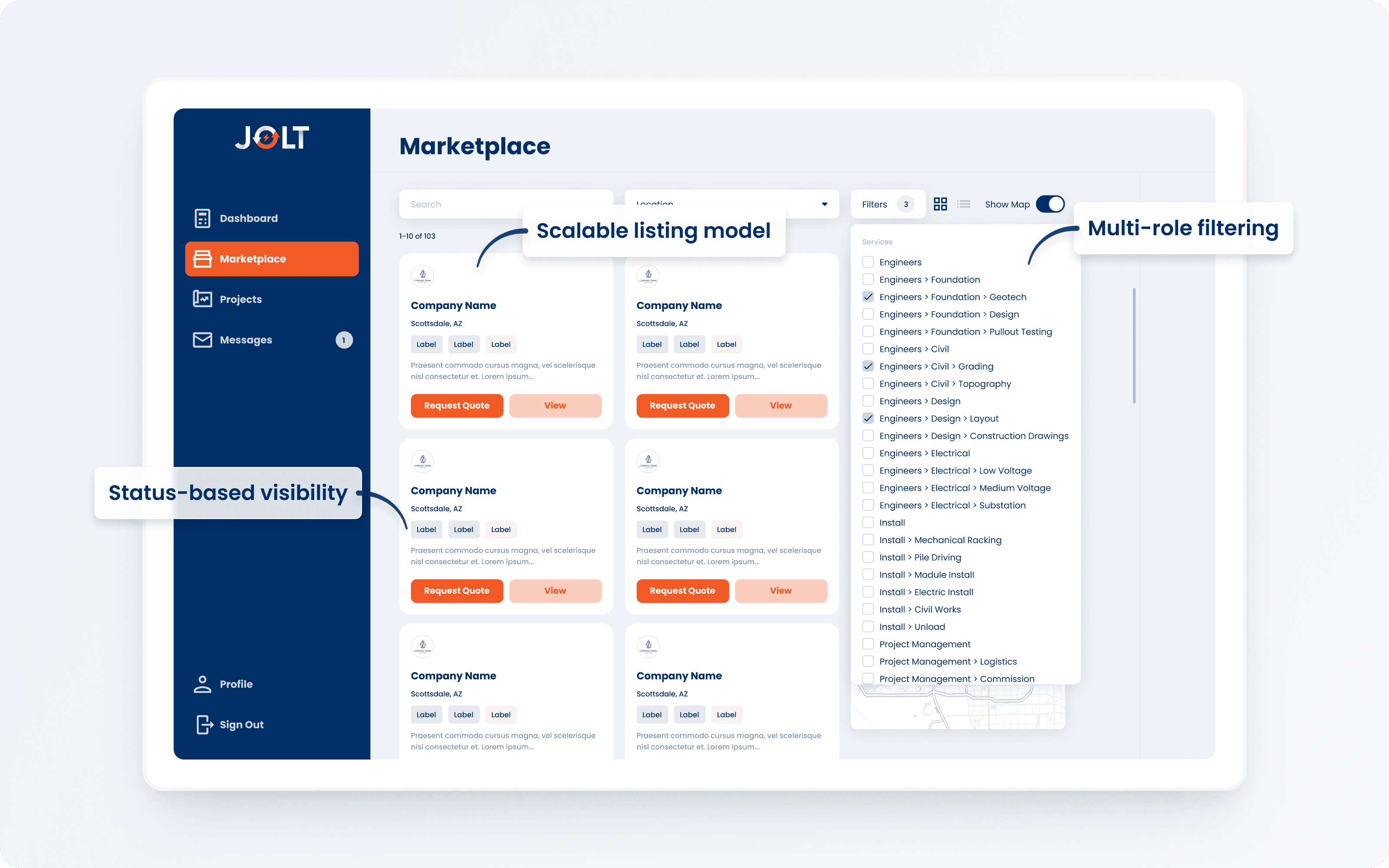
Structured listing architecture enabling installers to filter suppliers by project constraints, availability, and role-specific requirements.
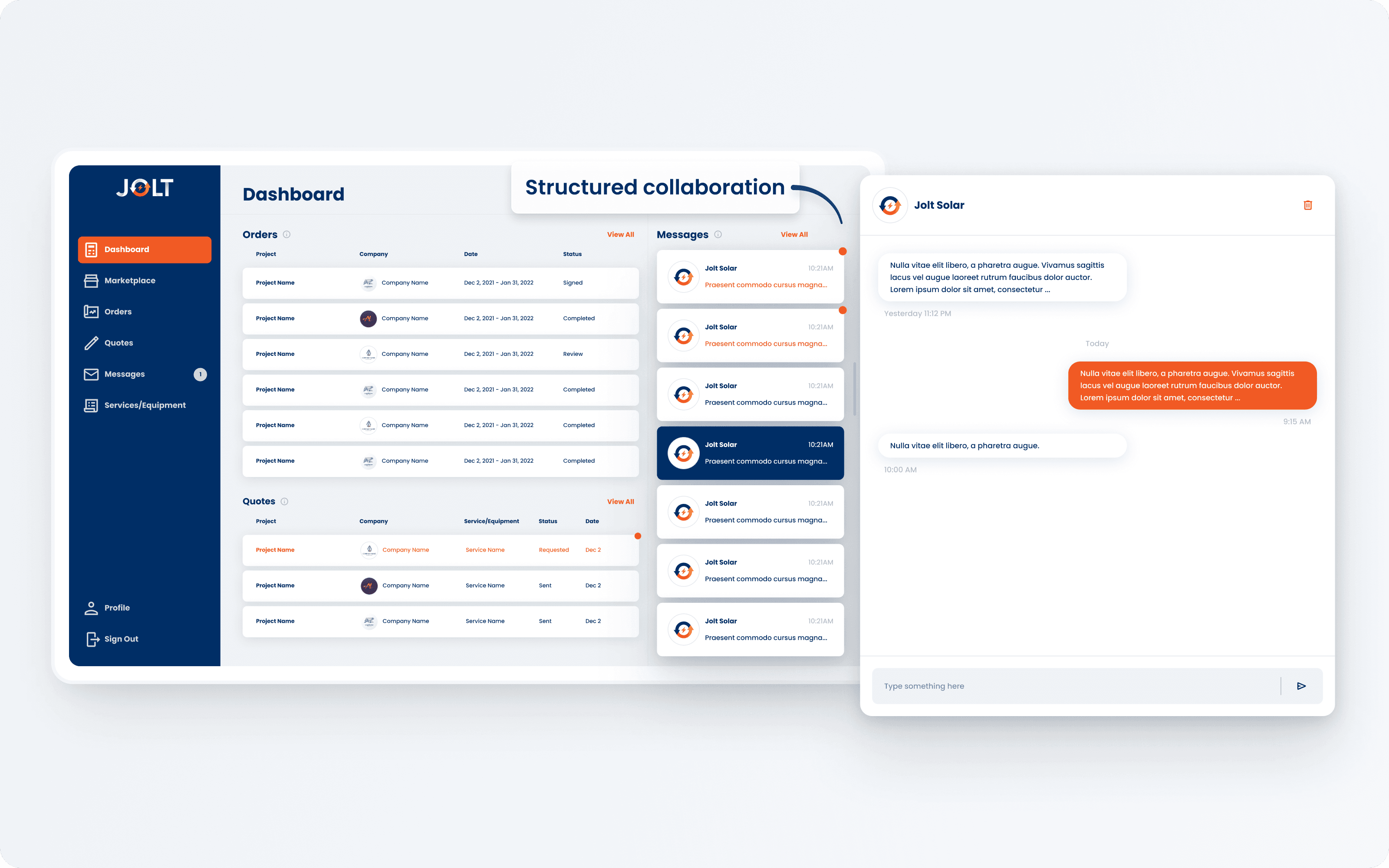
Integrated messaging workflows reducing reliance on external tools and centralizing project communication within the platform.
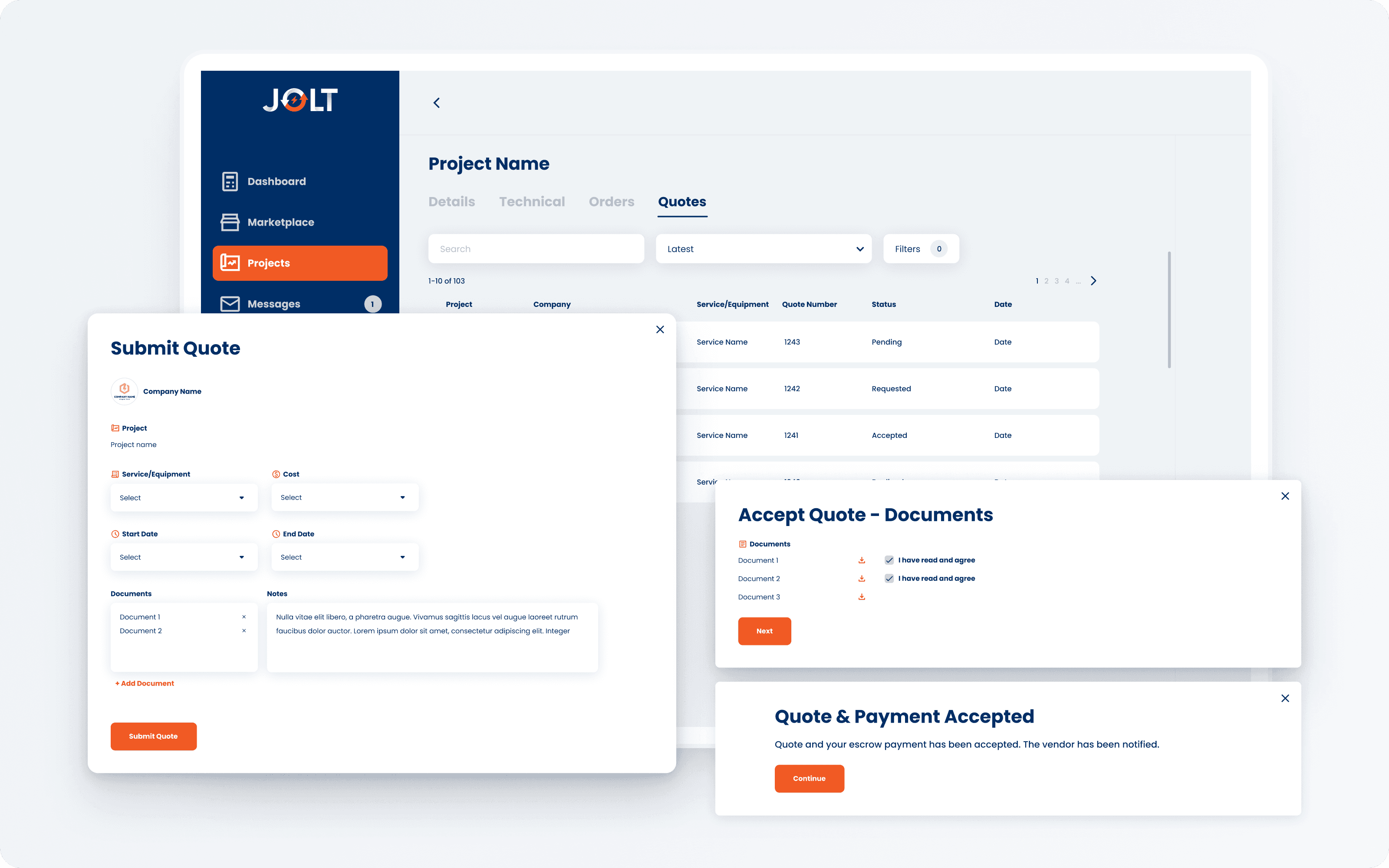
Quote and transaction workflows supporting negotiation, approval, and cross-party transparency within a unified marketplace system.
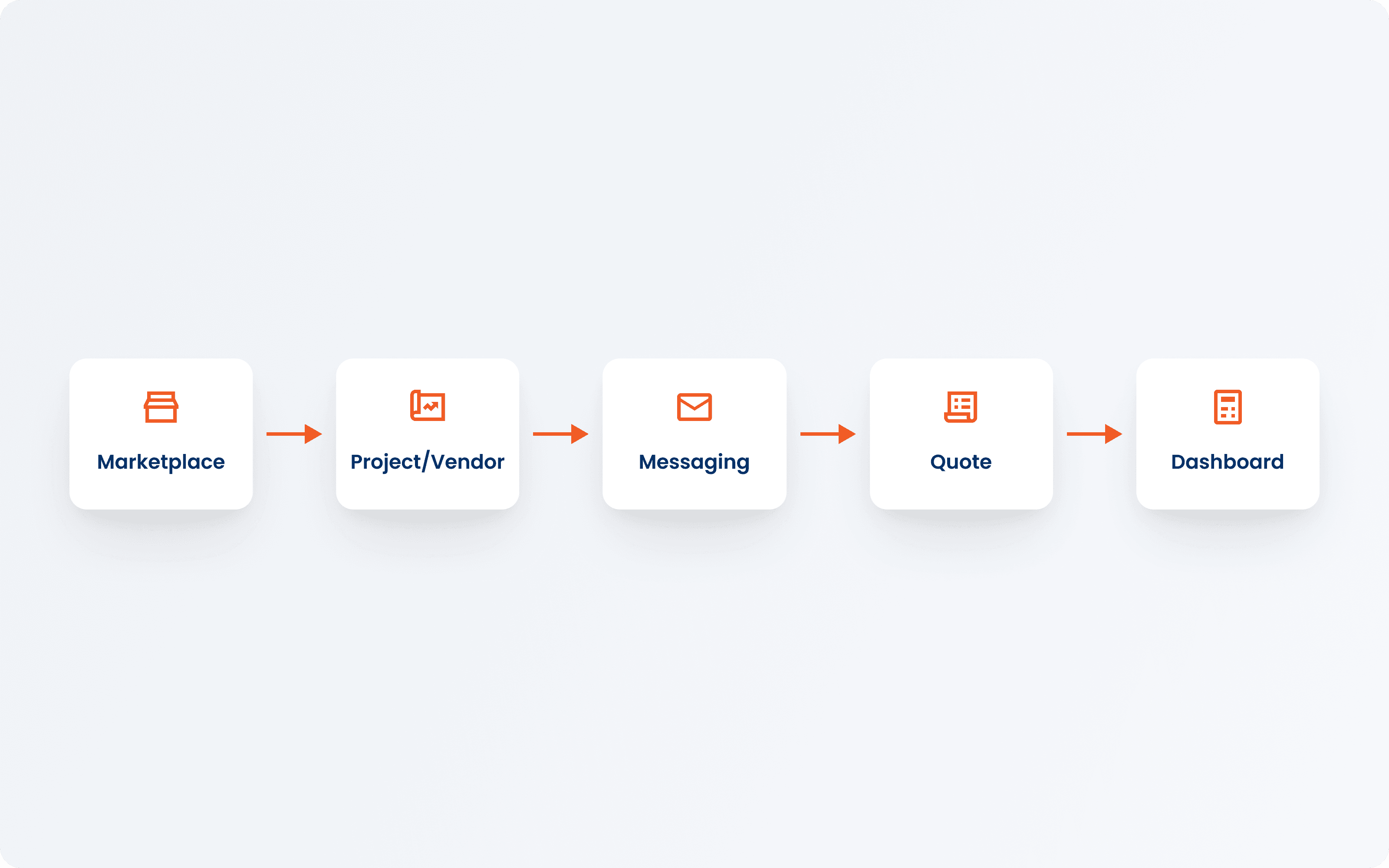
End-to-end marketplace coordination architecture aligning discovery, communication, and transaction across distributed solar stakeholders.

Let’s build intelligent systems together.
Open to Head of Product Design and Director of Product Design roles across AI, fintech, infrastructure, and complex platforms.